Attractions Assistance Pass

Overview
Replacing a fragile paper pass system with a seamless in-app experience, so guests with accessibility needs could focus on enjoying the park, not managing a pass.
The Challenge
Paper passes weren't cutting it
Business
Outdated manual process with no digital integration and growing operational overhead.
Below shows that manual process.
Guest
Paper passes got wet, lost, and destroyed, adding stress to guests who already faced accessibility barriers.

Research & Discovery
Two insights that defined the design
Inconsistent enforcement was creating an unequal experienceFast, code-based check-in
Team members interpreted the paper pass differently, introducing unintentional bias at the attraction. Modeled the digital scan after the Express Pass flow to standardize the experience for every guest.
Requiring a guest services visit was a barrier before the day even startedJust-in-time context
Guests had to physically visit a location just to enroll. Moving the entire flow into the app removed that hurdle entirely.

Design Process
Native to the app. Tailored to the guest.
Integrated tightly with the app's existing POI and wait time architecture for a seamless end-to-end flow.
Maintained autonomy within the flow, designed specifically for AAP guests, not a one-size-fits-all experience.
Leaned on the global design system for brand consistency, with deliberate deviations to serve the accessibility-first context.
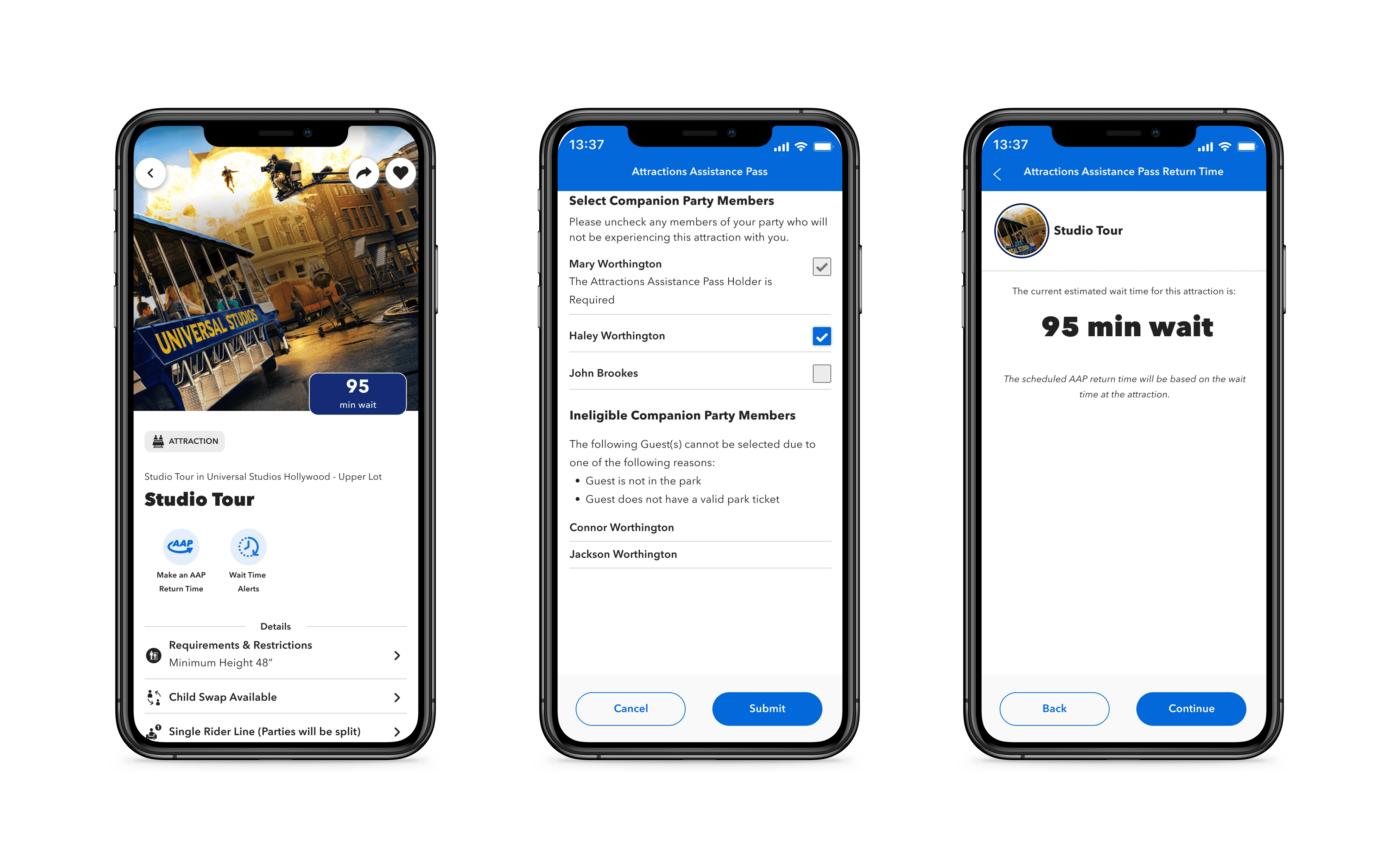

Usability Testing - 20 Participants
Core flow held. Two gaps surfaced.
What worked: Creating return times and navigating existing reservations were intuitive across participants.
Launch day — by 1:00 pm
190
Enrollments
375
Companions added
299
Return times
85
Cancellations
Day 2 — by 1:00 pm
299
Enrollments
639
Companions added
604
Return times
183
Cancellations
"A guest who received a paper AAP two weeks prior came to guest services specifically to switch to the digital version after seeing it on social media."
Reflection
What I'd carry forward
What I'd revisit
The 6-companion cap was a step back from the paper pass. Larger parties were disadvantaged, a clear candidate for the next iteration.
What I learned
Accessibility spans far beyond mobility. Designing for it opens the product to a broader, underserved audience, and is both a responsibility and a business opportunity.
© Joshua Miller 2025